What Is Considered Reckless Driving?
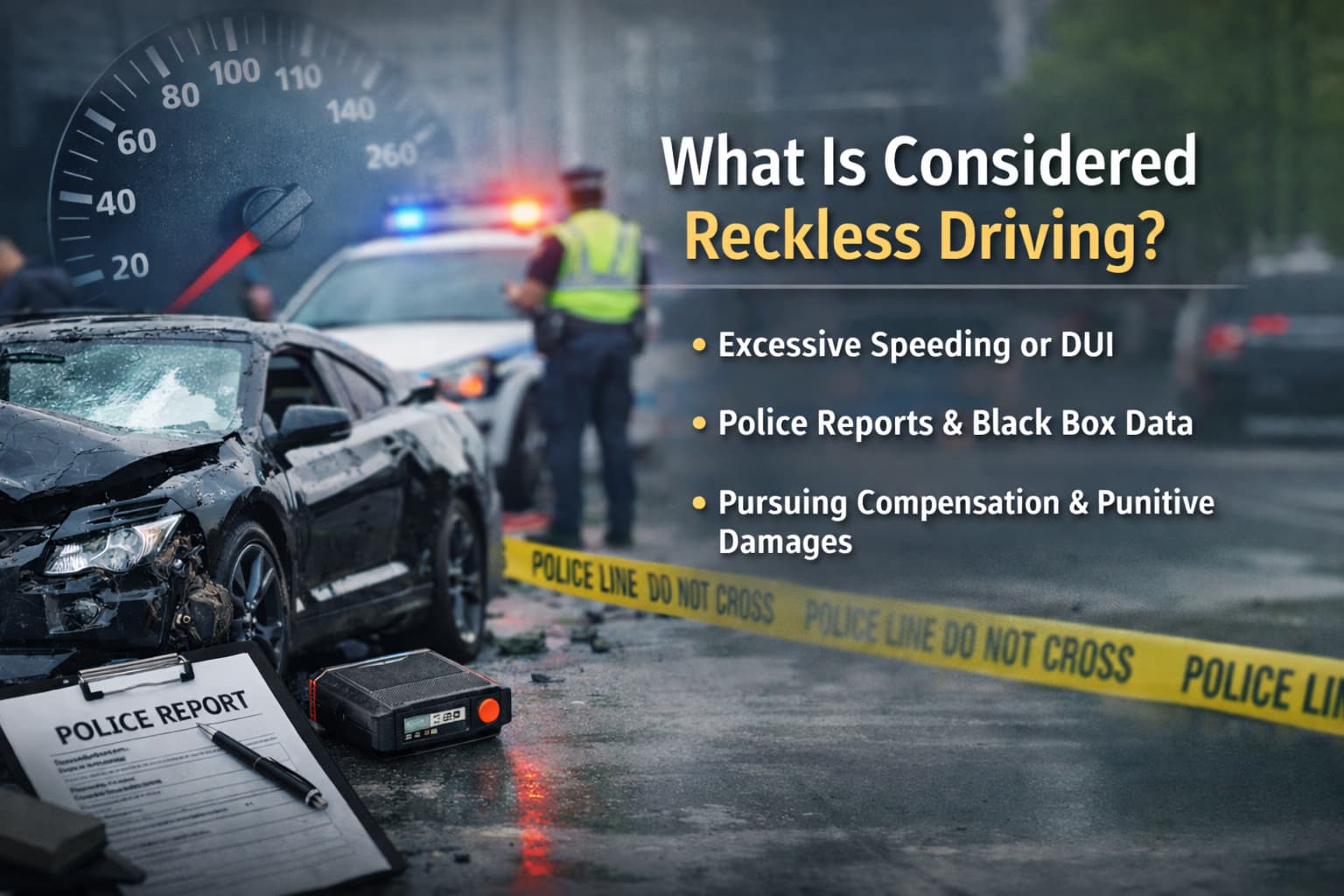
The law defines reckless driving as operating a vehicle with a “willful or wanton disregard” for the safety of people or property. It implies that the driver knew their actions were dangerous and chose to proceed anyway, and is a key factor in a personal injury case.
Proving that the other driver’s actions were reckless, not merely negligent, is the primary focus for securing civil justice. Establishing recklessness opens the door to pursuing not only compensation for your medical bills and lost income but also punitive damages, which are intended to punish the wrongdoer for their egregious behavior.
At Emmanuel Sheppard & Condon, our practice focuses on difficult vehicle accident cases where the other driver’s state of mind is a key element of the legal strategy. We understand the nuances required to demonstrate that a driver’s conduct went far beyond a simple error.
If you have a question about a crash involving a dangerous driver, call our experienced car accident lawyers today for a free consultation.
Schedule Your Free Case Review
Key Takeaways for Reckless Driving Claims
- Recklessness is a conscious disregard for safety, not just carelessness. This distinction is crucial because it allows you to pursue punitive damages, which are designed to punish the offender, in addition to compensation for your losses.
- Specific actions like excessive speeding, DUI, or street racing are strong indicators of recklessness. Evidence such as police reports, black box data, and witness testimony is used to prove the driver’s dangerous state of mind.
- A reckless driving charge strengthens your civil claim. Even if the driver avoids a criminal conviction, the lower burden of proof in a civil case means you can still hold them accountable and recover damages for your injuries.
The Legal Distinction: Negligence vs. Gross Negligence vs. Recklessness
Ordinary Negligence (Careless Driving)
This is the most common standard in car accident cases. Negligence is the failure to act as a reasonably prudent person would under similar circumstances. In Florida, this is also called careless driving under § 316.1925 of the Florida Statutes. Examples include momentarily looking away from the road to change the radio, misjudging the distance in a rear-end collision, or failing to see another car in a blind spot.
Recklessness (Willful and Wanton Conduct)
Recklessness is a significant leap beyond carelessness. The driver must have known, or should have known, that their behavior was dangerous and likely to cause harm, but they proceeded anyway. This is the “willful or wanton disregard” standard found in Florida case law and statutes, a conscious and intentional indifference to the consequences. The law asks, “Would a reasonable person believe this behavior created a substantial and unjustifiable risk?” If the answer is yes, the conduct may be deemed reckless.
Civil vs. Criminal Reckless Driving
Reckless driving leads to two separate legal cases: a criminal case brought by the state and a civil claim brought by you, the victim. The police may charge the driver with the crime of reckless driving. However, even if the driver is found not guilty in criminal court, you still have the right to pursue a civil claim.
This is possible because the two systems have different burdens of proof. In criminal court, the prosecutor must prove the case beyond a reasonable doubt, a very high standard. In a civil personal injury case, we only need to prove recklessness by a preponderance of the evidence. This simply means showing that it is more likely than not (even just 51% likely) that the driver acted with reckless disregard for safety.
Specific Behaviors That Constitute Reckless Driving
- Excessive Speeding: Speeding alone isn’t automatically reckless, but context is everything. Driving 25 mph over the speed limit on a clear, empty highway might be a speeding ticket. Driving 25 mph over the limit in a school zone, in heavy rain, or through a busy intersection is strong evidence of a willful disregard for safety. In a recent year alone, more than 11,000 people were killed in speeding-related crashes.
- Fleeing Law Enforcement: Under Florida Statute § 316.192, the act of fleeing from a police officer in a motor vehicle is automatically considered reckless driving. This is known as recklessness per se, and it removes the need to argue about the driver’s state of mind.
- Street Racing and Sideshows: Illegal street racing and highway takeovers have become more frequent. Participating in any kind of speed contest on a public road is a clear example of knowingly creating a dangerous situation and serves as powerful evidence of reckless conduct.
- Driving Under the Influence (DUI): While DUI is a separate criminal charge, the act of driving while impaired by alcohol or drugs is used in civil cases to establish recklessness. A driver who gets behind the wheel while intoxicated has made a conscious choice that disregards the life and safety of every other person on the road.
- Aggressive Driving Patterns: This category includes a cluster of dangerous actions that show an intent to intimidate or harass. Examples include:
- Weaving aggressively through traffic at high speeds.
- Tailgating another vehicle in a threatening manner.
- Brake checking, or slamming on the brakes intentionally to menace a driver behind you.
- Extreme Distracted Driving: There is a difference between a momentary lapse in attention and a prolonged, deliberate distraction. A quick glance at a GPS could be considered simple negligence. However, watching videos, streaming content, or engaging in a lengthy text conversation while driving at highway speeds is argued as a conscious disregard for safety, potentially rising to the level of recklessness.
The Statutory Landscape in Florida
Florida’s Reckless Driving Law
Florida Statute § 316.192 defines the offense as driving any vehicle “in willful or wanton disregard for the safety of persons or property.” The penalties become more severe depending on the outcome of the driving.
- If the act causes property damage or minor personal injury, it is a first-degree misdemeanor.
- If it results in serious bodily injury, it becomes a third-degree felony, punishable by up to five years in prison.
The Power of a Traffic Citation
When a police officer issues a citation for reckless driving under one of these specific statutes, it provides a strong foundation for your civil claim. While not definitive proof, it is an official observation by a law enforcement officer that the driver’s behavior met the legal standard for recklessness.
This shifts the dynamic in negotiations with an insurance company, making it harder for them to argue that the crash was just a result of simple carelessness. The interpretation of what constitutes willful or reckless behavior sometimes varies based on local conditions and court precedents. An attorney familiar with the local judiciary provides perspective on how these cases are typically viewed.
Schedule Your Free Case Review
From Crash to Compensation: How Recklessness Impacts Civil Claims
The most significant impact of proving reckless driving is that it opens the door to punitive damages. Standard compensation (known as compensatory damages) covers your tangible and intangible losses like medical bills, lost wages, and pain and suffering. Punitive damages go a step further: their purpose is to punish the defendant for outrageous conduct and deter similar behavior in the future.
Under Florida law, punitive damages are reserved for cases involving “intentional misconduct or gross negligence.” Reckless driving falls squarely into this category. Pursuing these damages sends a clear message that such disregard for human safety will not be tolerated.
Leverage Against Insurance Companies
Insurance companies are businesses that must balance paying claims with making a profit. When faced with a claim of simple negligence, they may offer a lower settlement, knowing they can argue about the details of the accident.
However, a well-documented case of reckless driving presents a greater risk for them. They know that if the case goes to a jury, the evidence of the other driver’s egregious behavior will be highly persuasive and could lead to a very large verdict, including punitive damages. This pressures them to settle the case for the policy limits much more quickly.
What About Intentional Act Exclusions?
A common concern is whether an insurance policy will cover a crash caused by an intentional reckless act. Generally, insurance does not cover intentional harm, however, the law recognizes that while the act (like extreme speeding) may have been intentional, the result (the crash and your injuries) was not. The driver intended to speed, but they did not specifically intend to crash into you. Because of this nuance, auto insurance coverage almost always remains intact for a civil claim.
Liability Beyond the Driver
If the reckless driver was working for a company or driving a company vehicle, their actions create liability for their employer. This is known as vicarious liability. Furthermore, if the driver was a minor with a known history of dangerous driving, the parents who entrusted them with the vehicle could potentially be held liable under a theory of negligent entrustment.
Building the Case: Evidence of Recklessness
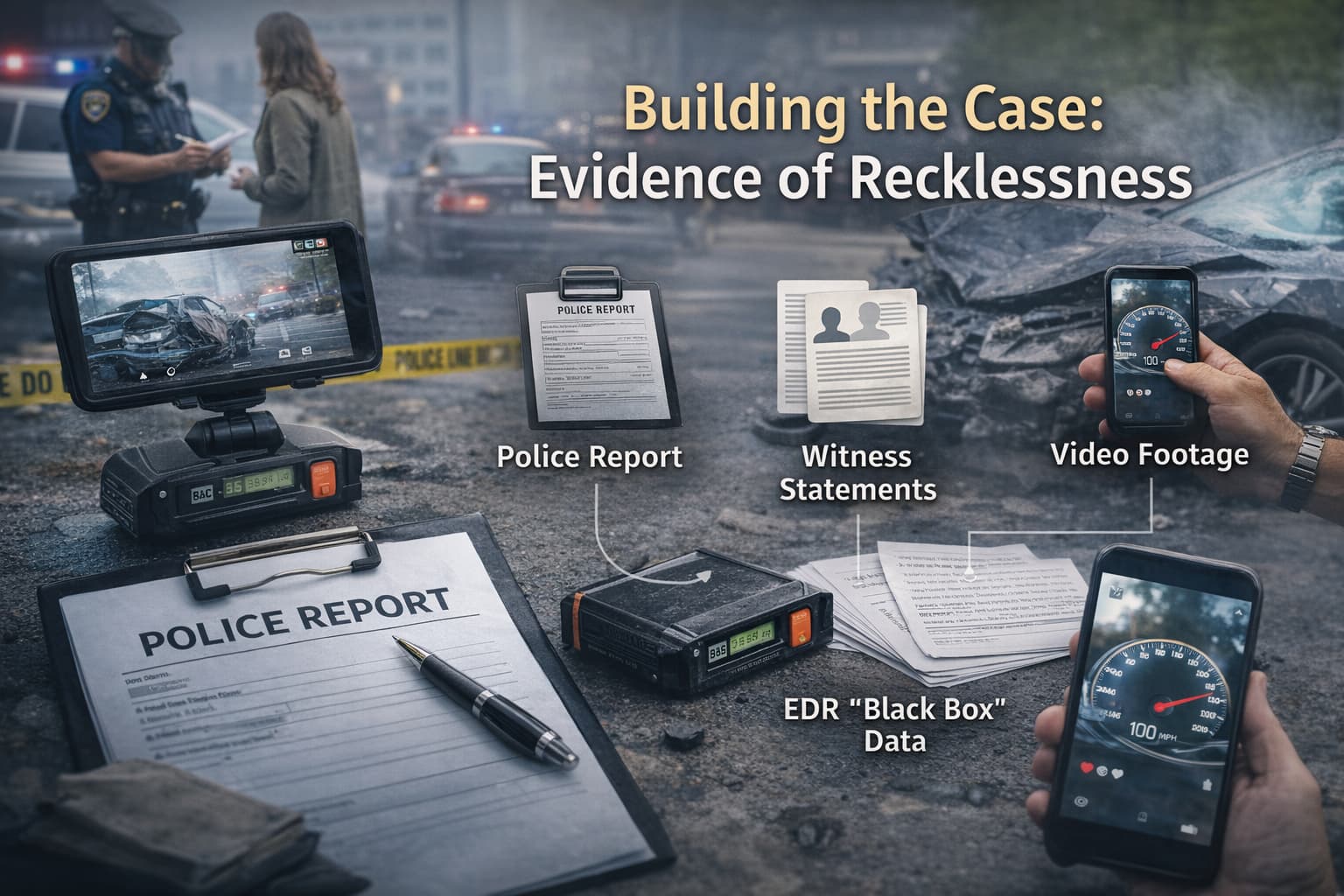
A successful claim requires concrete, objective evidence that paints a clear picture of the driver’s state of mind and dangerous actions. While you are recovering, we are focused on gathering the necessary pieces of proof needed to build your case.
Here are some of the key sources of evidence we investigate:
- The Police Report: The responding officer’s narrative is the starting point. We look for keywords like excessive speed, aggressive, erratic, or a citation for a specific reckless driving statute like § 316.192.
- Electronic Data Recorders (EDRs): The EDR, also called a car’s black box, is a device in modern vehicles that records data in the seconds leading up to a crash. It provides unbiased proof of the vehicle’s speed, braking inputs, throttle position, and steering angle.
- Witness Statements: Independent witnesses are invaluable. We specifically seek out witnesses who may have seen the driver’s behavior before the crash occurred. A witness who confirms, for example, that the driver blew past them at 100mph helps establish a pattern of recklessness, not just a single mistake at the point of impact.
- Video Footage: Visual evidence is incredibly compelling. We immediately work to preserve footage from any available source, including nearby Ring doorbells, business security systems, traffic cameras, and, increasingly, other drivers’ dashcams.
- Social Media and Digital Footprints: In some cases, reckless drivers incriminate themselves. They may have a history of posting photos of their speedometer, videos of themselves street racing, or other content that demonstrates a pattern of dangerous behavior. We conduct thorough investigations to uncover any such evidence.
Frequently Asked Questions About Reckless Driving Accidents
Can I sue if the reckless driver was acquitted in criminal court?
Yes, absolutely. As mentioned earlier, the burden of proof is much lower in a civil case (preponderance of the evidence) than in a criminal one (beyond a reasonable doubt). An acquittal in criminal court has no legal bearing on your right to pursue a civil claim for compensation.
Does Florida’s No-Fault law apply to reckless driving crashes?
Yes, at the beginning. Under Florida’s No-Fault system, you must first turn to your own Personal Injury Protection (PIP) coverage for the initial portion of your medical bills and lost wages. However, injuries from a reckless driving crash typically meet the state’s serious injury threshold, which allows you to step outside the no-fault system and sue the at-fault driver for non-economic damages like pain and suffering.
Is driving significantly under the speed limit considered reckless?
In certain situations, it could be. For instance, driving 30 mph on an interstate where the minimum speed is 45 mph creates a serious hazard by forcing other drivers to brake suddenly or swerve dangerously. Stopping in an active lane of traffic without cause could also be considered a reckless disregard for the safety of others.
What if the reckless driver didn’t hit me, but caused me to crash?
This is sometimes called a phantom vehicle or miss-and-run accident. If you can prove that another driver’s reckless actions, such as cutting you off or running you off the road, forced you to crash, you may be able to file a claim against your own Uninsured Motorist (UM) coverage. Proving this requires strong evidence from witnesses or video footage.
How does comparative negligence work if I was also speeding?
Florida uses a modified comparative negligence standard. Your potential compensation is reduced by your percentage of fault. However, if you are found to be more than 50% at fault for the accident, you are barred from recovering any damages at all.
Don’t Let a Reckless Driver Downplay Their Actions
At Emmanuel Sheppard & Condon, we have decades of experience investigating the complicated details of serious car wreck cases. We know how to pull black box data, locate and interview key witnesses, and apply the law to demonstrate that the other party was not just careless, but reckless. We understand the anger and frustration that comes with being seriously injured because of someone else’s flagrant disregard for safety.
That feeling is valid, and the civil justice system provides a way to channel it into action. We are ready to listen to your story and help you determine the best path forward to hold the responsible party fully accountable.
Call us today to begin the conversation with a personal injury lawyer.
Schedule Your Free Case Review