Injured? Get help here!
Call Us 24/7

(850) 433-6581



Se Habla Español





Se Habla Español
Truck accidents often involve severe injuries and complicated investigations. Unlike standard car crashes, commercial trucking cases require examining company records, driver histories, maintenance logs, and data from specialized onboard technology.
Because critical evidence can disappear quickly, having a truck accident attorney involved early is essential. Emmanuel Sheppard & Condon helps injured Floridians understand how evidence preservation works and why it plays a major role in strengthening a claim after a truck accident.
Evidence in trucking cases is far more vulnerable than many people realize. Commercial trucking companies have systems in place that routinely overwrite electronic logs, delete onboard data, or dispose of maintenance records after a certain period.
Some of this is automatic through their fleet management systems, while other documents are discarded as part of routine business operations. Without immediate legal intervention, critical information may vanish in days or weeks.
In addition, trucks involved in crashes are often repaired quickly and put back into service. Once repairs begin, important damage patterns, mechanical failures, or defective components may no longer be visible. Insurance companies may also send their own investigators to a crash scene early, which means they collect information long before victims know what they need.
An attorney understands these time pressures and knows exactly what evidence must be protected. They act quickly to freeze the situation and ensure materials are preserved before they disappear. This immediate action lays the foundation for a strong, well-supported claim.
One of the first steps an attorney takes is issuing a spoliation letter — a formal legal notice requiring the trucking company and its insurer to preserve specific evidence. Once this letter is received, the company must keep records intact or risk legal penalties. This stops the routine destruction or overwriting of important data.
The spoliation letter typically includes requests for driver logs, maintenance records, black box data, employee files, inspection reports, and internal communications about the accident. It may also require the company to preserve the truck in its post-crash condition until independent experts can examine it.
Without this notice, evidence may be altered or lost through normal business practices. A spoliation letter ensures the attorney gains access to the full picture of what happened — not just what remains after records are overwritten or deleted. This step is crucial for building a strong truck accident case.
Most commercial trucks are equipped with an event data recorder — often called a “black box” — that captures speed, braking, gear shifts, acceleration, and other vital information. Some trucks also have advanced telematics systems that track driver behavior, rest breaks, and GPS movement.
This data is extremely useful in recreating the moments leading up to a crash, but it can be overwritten or deleted quickly if not preserved. An attorney works to secure access to these systems before data loss occurs. In some cases, independent forensic experts are brought in to download and analyze this information properly.
Black box data can show whether the driver was speeding, braking too late, exceeding service hours, or failing to control the truck safely. It also helps refute inaccurate statements from the driver or insurance company. When handled correctly, electronic data becomes one of the most powerful tools for establishing fault.
Commercial truck drivers must follow strict federal regulations governing rest breaks, training, and roadway behavior. Attorneys know how to obtain the documentation that shows whether a trucking company followed those rules. Driver logs reveal whether a driver exceeded hours-of-service limits, which is a common cause of fatigue-related crashes.
Training files may show whether the driver was properly qualified, whether they had a history of safety violations, or whether the company hired them negligently. Safety inspection reports reveal whether the truck received proper maintenance or whether mechanical failures contributed to the crash.
A trucking company may not hand this information over voluntarily. That’s why legal representation is so important — an attorney knows how to demand this documentation and how to hold companies accountable if they attempt to hide or destroy records. These internal documents often reveal patterns of unsafe practices, which significantly strengthen a claim.
Truck accidents are complex events that require detailed analysis from professionals who understand crash mechanics. Attorneys frequently work with accident reconstruction experts to evaluate skid marks, impact angles, vehicle damage, and roadway conditions. These experts rely heavily on preserved evidence — the truck itself, scene photographs, black box data, and debris patterns.
The sooner an attorney becomes involved, the more likely it is that these experts can examine the scene while the evidence is still intact. If time passes, skid marks fade, debris is cleared, and traffic resumes, making it harder to reconstruct what happened accurately.
Reconstruction experts help explain how and why the collision occurred, identifying critical factors such as speed, braking, visibility, and vehicle positioning. Their findings are often central to proving fault, especially when insurers dispute liability. Preserving the right evidence early ensures that these experts can form accurate, compelling conclusions.
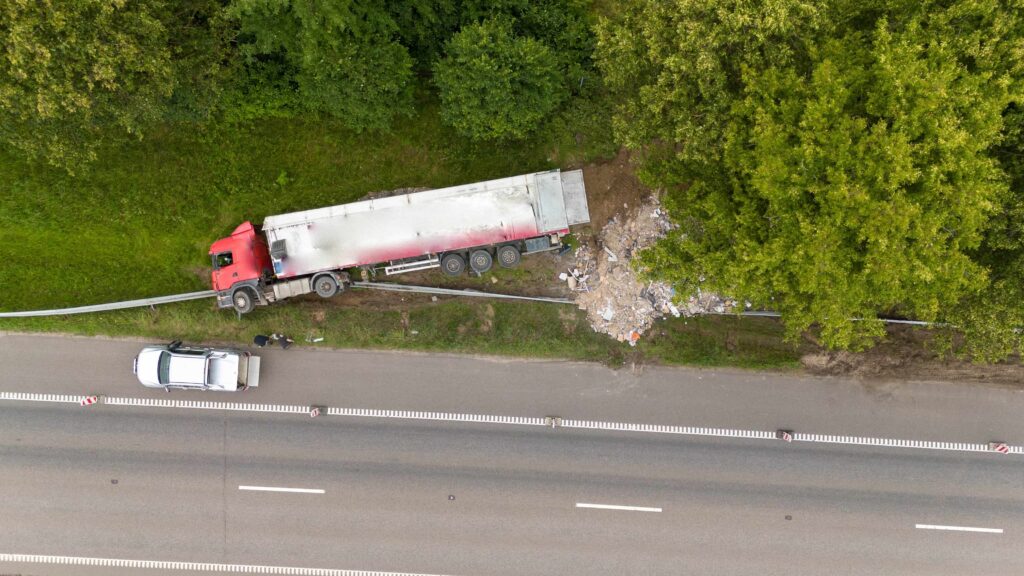
The physical condition of a commercial truck after a collision can reveal important details about how the crash occurred. Damage patterns, crumple zones, tire marks on the truck, and points of impact help accident reconstruction experts understand vehicle speed, direction, and driver reaction time. These details are often lost once the truck is repaired or scrapped, which happens quickly in commercial fleets.
Attorneys know how essential these physical inspections are. They can request that the truck be preserved until qualified experts examine it. This allows specialists to study mechanical components, braking systems, steering mechanisms, and other parts that may have malfunctioned or contributed to the crash. Without legal intervention, the vehicle may be repaired immediately, making this analysis impossible.
Photographs alone cannot always show whether a brake failure occurred, whether a tire defect contributed to the collision, or whether the truck’s condition violated federal safety regulations. Preserving the vehicle allows experts to confirm or rule out these possibilities. This evidence is often critical when liability is disputed or when multiple parties — the driver, the trucking company, or a maintenance provider — may share responsibility.
By ensuring access to the truck before it undergoes any changes, attorneys protect a key component of the case and help establish a clearer, more accurate picture of what happened.
Witnesses play an important role in truck accident claims because they often see things that cameras miss or that drivers forget under stress. However, witness memories fade quickly, and their contact information may get lost if no one gathers it promptly. Early witness statements can capture vivid, reliable details that support the injured person’s account of the crash.
Attorneys and their investigative teams work to identify witnesses, speak with them quickly, and record their observations. These statements may describe erratic driving, speeding, lane drifting, improper passing, or the truck driver’s behavior immediately before impact. Witnesses may also comment on weather, lighting, or roadway hazards that influenced the crash.
If statements are taken too late, witnesses may unintentionally revise details or lose confidence in what they remember. Insurance companies may challenge credibility or argue that uncertain recollections reduce the reliability of the claim. Preserving strong, timely witness accounts helps protect against these tactics.
Attorneys know how to approach witnesses respectfully and legally, ensuring their statements are clear, structured, and usable in negotiations or litigation. When witness testimony aligns with physical evidence and electronic records, it becomes a powerful tool for establishing fault.
An accident scene changes rapidly once emergency responders and cleanup crews arrive. Tire marks fade, debris is removed, vehicles are towed, and traffic resumes. Because trucks are large and heavy, they often create distinctive patterns at the scene — long skid marks, wide debris fields, or displaced barriers — but these markers disappear quickly.
Attorneys work to secure photographs, videos, and measurements before the scene changes. They may use investigators, crash reconstruction experts, and even drone imaging to document the layout of the roadway, visibility conditions, traffic signals, and any relevant signage. The condition of the road itself — such as potholes, oil spills, or uneven pavement — may also play a role in the analysis.
Without this documentation, insurers may claim there is insufficient proof of speed, braking, or driver response. Scene evidence helps counter these arguments by showing objective, measurable facts. It also helps experts reconstruct the crash accurately and link specific injuries to the mechanics of the collision.
By preserving physical details early, attorneys strengthen the overall claim and prevent important elements from being lost or overlooked.
Trucking companies often create internal reports immediately after an accident. These may include supervisor notes, employee statements, fleet manager communications, and company-wide safety alerts. These documents can contain valuable information about driver behavior, vehicle conditions, or company policy violations.
However, companies rarely volunteer these records without a legal request. In some cases, they may attempt to limit what is shared or delay releasing information. An attorney knows how to request these materials formally and compel compliance when necessary. These internal records may reveal prior complaints about the driver, missed maintenance checks, or internal warnings about equipment issues.
Emails and digital communications can also be crucial. They may show company expectations that encourage unsafe driving, such as unrealistic delivery schedules or pressure to bypass mandatory rest periods. When attorneys uncover these communications, they create a stronger link between company decisions and the accident.
Preserving and reviewing internal communications ensures the full story comes to light, especially when unsafe practices contributed to the crash.

Truck accident cases are governed by strict legal timelines. Certain evidence must be requested quickly to avoid being lawfully destroyed under routine data retention policies. Other materials may require formal legal filings to obtain. Missing these deadlines can weaken or even jeopardize a claim.
Attorneys understand these time limits and act immediately to prevent evidence loss. They know how long companies typically store electronic logs, camera footage, and safety data — often only a matter of weeks. They also understand when to file motions, subpoenas, or preservation orders to secure access to critical information.
Victims who attempt to handle the process alone may be unaware that vital evidence is already disappearing. Legal representation ensures that deadlines are met, requests are filed correctly, and the case begins on a strong foundation. This helps avoid disputes later and preserves the integrity of the evidence needed to prove fault.
If you’ve been hurt in a truck accident, preserving evidence quickly may be the most important step in building a strong claim. Emmanuel Sheppard & Condon understands how fast critical information can disappear and how essential it is to act immediately.
Our team is ready to evaluate your situation, explain your options, and take steps to protect the evidence that matters most. You don’t have to navigate the aftermath alone — guidance and support are available as soon as you reach out.
For clear answers and strong representation, give us a call today at (850) 433-6581.